RFQ-first manufacturing websites.

We build your website around the request for quote, so buyers send the drawing, quantity, material, and date in one form.

Sound familiar?

Most manufacturers we talk to are dealing with at least one of these.

  1. 01

    The contact form fills with everything except quote requests

    Job applications, sales pitches, and spam come through, while real requests still arrive by email from people who already knew you. A buyer who has never heard of you finds nowhere obvious to send a drawing.

    How we fix it. We build a quote form that takes the drawing in the file types you accept, with the quantity, material, and date on the same screen. Each request goes straight to your sales team, and on the Mechanical Finishers and PLI sites, Cloudflare Turnstile keeps the spam out.

    Contact form, this week

    • Job application
    • Sales pitch
    • Spam
    • Newsletter signup
    • Quote request

    Quote form

    DrawingSTEP, DWG, or PDF

    Quantity500 pieces

    Material6061-T6

    Needed byMarch 14

    Sent to your sales team

    What a general contact form collects, and what a quote form asks for.
  2. 02

    Every request takes a string of emails before you can price it

    A form with a name, an email, and a message box cannot carry a drawing, so your estimator writes back for the print, then the quantity, the material, and the date. The old Mechanical Finishers form capped the message at 180 characters, and the old SurfTech quote page asked for drawings with no way to attach one.

    How we fix it. The form asks for what your estimator needs on the first pass. The SurfTech form now asks for the part, the substrate, the quantity per lot, the coating, and how the part fails now, with a drawing field that takes PDF, DXF, DWG, STEP, IGES, STL, and ZIP files. Our pages for machine shops, fabrication shops, heat treaters, injection molders, and contract manufacturers show what each trade’s form asks for.
    Contact form

    1. Buyer Can you quote this part?
    2. You Can you send the drawing?
    3. Buyer Attached.
    4. You What quantity and material?
    5. Buyer 500 pieces in 6061.
    6. You When do you need them?

    Six emails before anyone can price it

    Quote form

    Drawing attached

    500 pieces

    6061-T6

    Needed by March 14

    Ready to price on the first read

    The same request sent through a contact form and through a quote form.
  3. 03

    Buyers cannot tell from your site whether you can make the part

    An engineer checks the process, material, tolerance, and certification before writing to anyone. When the page cannot answer, they move to the next supplier, and you never hear about it.

    How we fix it. We write a page for each process you run, with the materials, tolerances, part sizes, and certifications as plain text, and add tools an engineer can use before calling, such as the hydrogen embrittlement bake advisor on the Mechanical Finishers site.

    1. Searches on Google
    2. Opens your website
    3. “Can they make my part?”

    No clear answer

    Moves on to the next supplier. You never hear about it.

    The answer is on the page

    Sends you the drawing for a quote.

    Two ways the same visit can end.
  4. 04

    Questions sent after hours wait until morning

    A buyer comparing suppliers late in the evening often has one question before sending a drawing. In a Harvard Business Review study of 2,241 US companies, 23% never answered a web inquiry at all.

    How we fix it. Every $6,000 website comes with an AI assistant that answers from your own approved pages at any hour. Anything those pages do not cover goes to a person on your team, with the visitor’s contact details attached.

    Without an assistant

    The question waits in an inbox until the next morning.

    With the assistant

    Answered in seconds from your own pages, and saved to your lead sheet.

    A question sent at 9:40 PM, answered two ways.
  5. 05

    Nobody can say which page brought in the work

    Requests land in the sales inbox, in an engineer’s inbox, or on a note by the phone. Without a record of where each one came from, you cannot tell which pages are earning their place.

    How we fix it. Every inquiry from the forms and the assistant is saved to an Excel lead sheet that is yours to keep, and also sent to your sales inbox. Tracking shows which page each request came from.

    Where requests end up today

    • Sales inbox page unknown
    • An engineer’s inbox page unknown
    • A note by the phone page unknown

    Your Excel lead sheet

    Came inSent throughFrom page
    Mon 9:12 AMQuote formZinc plating
    Mon 9:40 PMAssistantPassivation
    Tue 7:05 AMQuote formBusiness Profile
    Where requests end up today, and the lead sheet you keep.

From search to quote request

This is the path a buyer takes to your quote form, and what the website does at each step.

  1. 01

    Finds your process page

    The buyer searches for the process and material on the drawing.

    We write a page for each process you run.

  2. 02

    Checks the fit

    They look for the material, tolerance, part size, and certification they need.

    Every figure is plain text, approved by your team.

  3. 03

    Asks a question

    They want one thing confirmed before sending a print.

    The assistant answers from your approved pages.

  4. 04

    Sends the RFQ

    They attach the drawing and add the quantity, material, and date.

    The request goes to sales and into your lead sheet.

What the $6,000 RFQ-first website includes

Every website we build comes with all of this, paid once.

The RFQ-first website at a glance.
What you getA quote form that takes the drawing, quantity, material, and date, a page for each process you run, an AI assistant, and an Excel lead sheet.
Price$6,000, one time
Smaller shopsA starter website for a shop with one or two processes is $2,000, also with a quote form that takes drawings.
Time to launch6 to 18 days from brief to launch
Who owns itYour company. The full source code is yours at launch.
How it startsSend us your website address and a few lines about what you make.
  • Your quote form takes drawings in the file types you accept, along with the quantity, material, and date, and sends each request to your sales team.
  • Every process you run gets its own page, with the materials, tolerances, part sizes, and certifications written as text that Google and AI assistants can read.
  • An AI assistant answers buyers from your approved pages at any hour and hands anything else to a person, with the visitor’s contact details attached.
  • Every inquiry from the assistant and the forms is saved to an Excel lead sheet that is yours to keep, and also sent to your sales inbox.
  • We set up Google Analytics, Search Console, and call and form tracking, so you can see which page each request came from.

The rest of the build, from the capability tables to the handover, is on our manufacturing website design page, and the code and every account are yours, as set out under website ownership. A group with several divisions gets a quote form for each of its division sites, and every price Shopfloor Agency charges is on our pricing page. Our page on website design for B2B buyers covers the spec tables and shareable pages that sit around the quote form.

Quote forms we have built

Each form asks for what that company needs to price the work. Our guide to the RFQ form for manufacturers lists every field worth asking for.

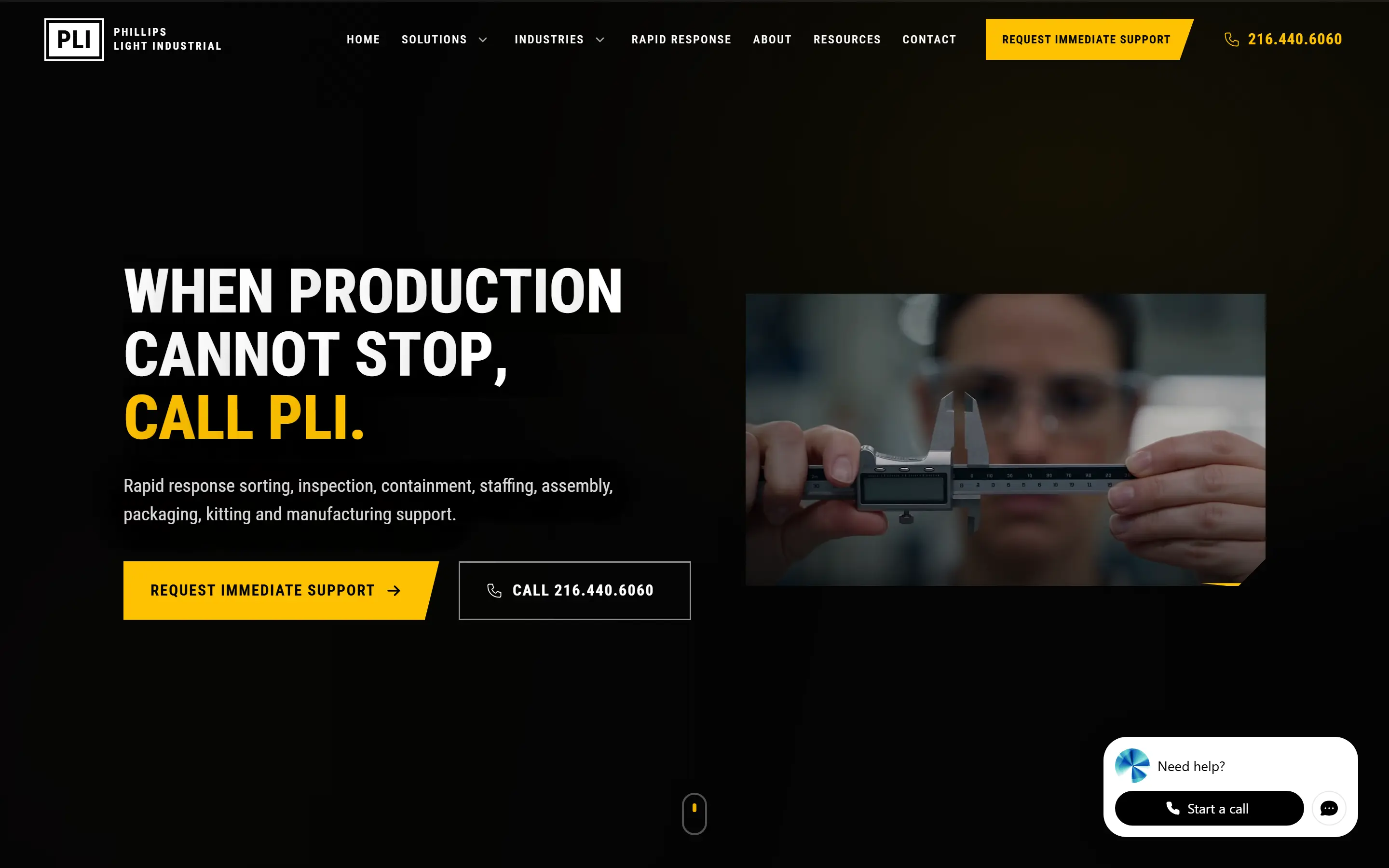
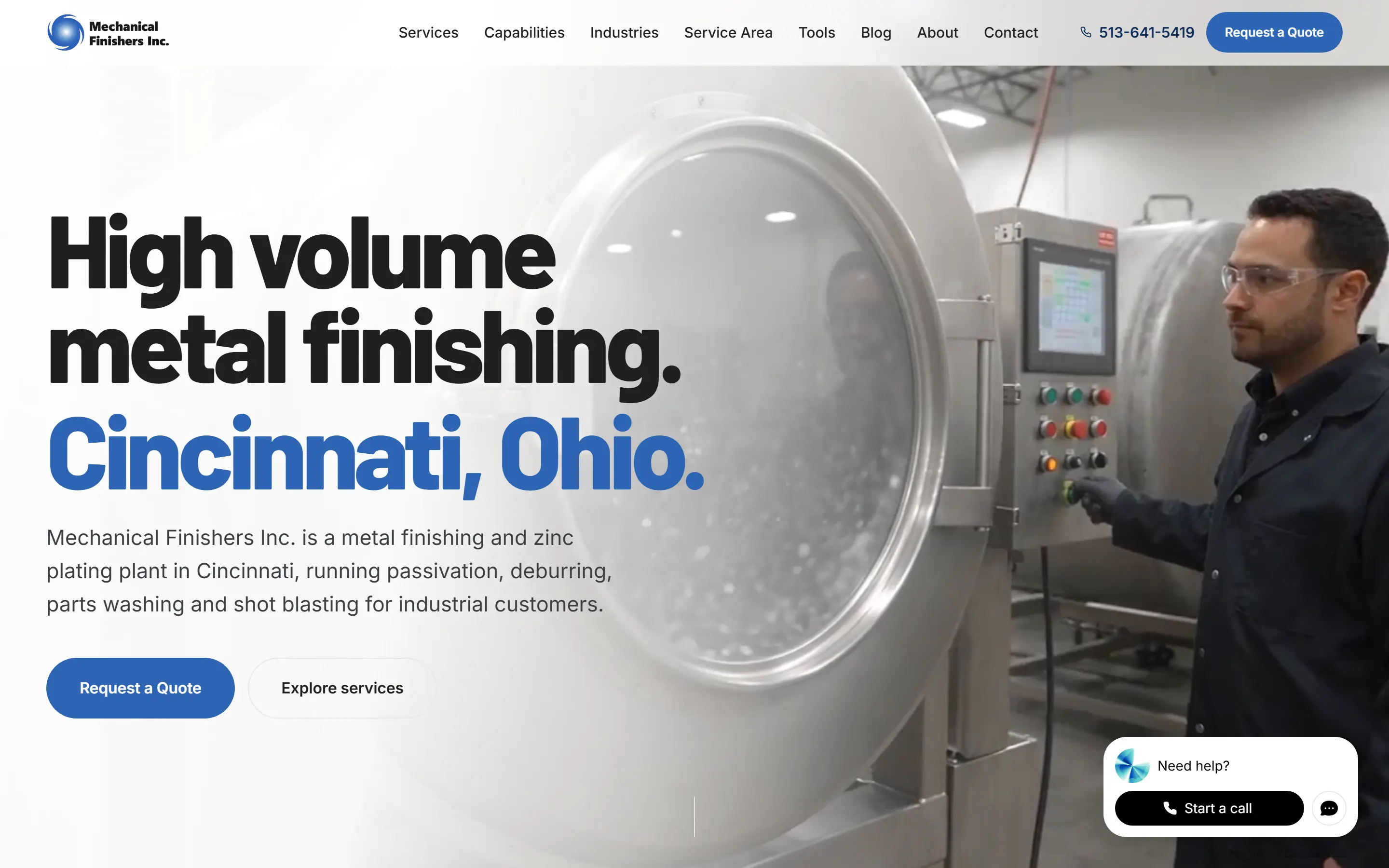
  • Mechanical FinishersThe quote form asks for the company, the process, the part material, the annual volume, and the part and finish details, with guidance on what to send with an RFQ. Cloudflare Turnstile and a hidden field keep spam out.
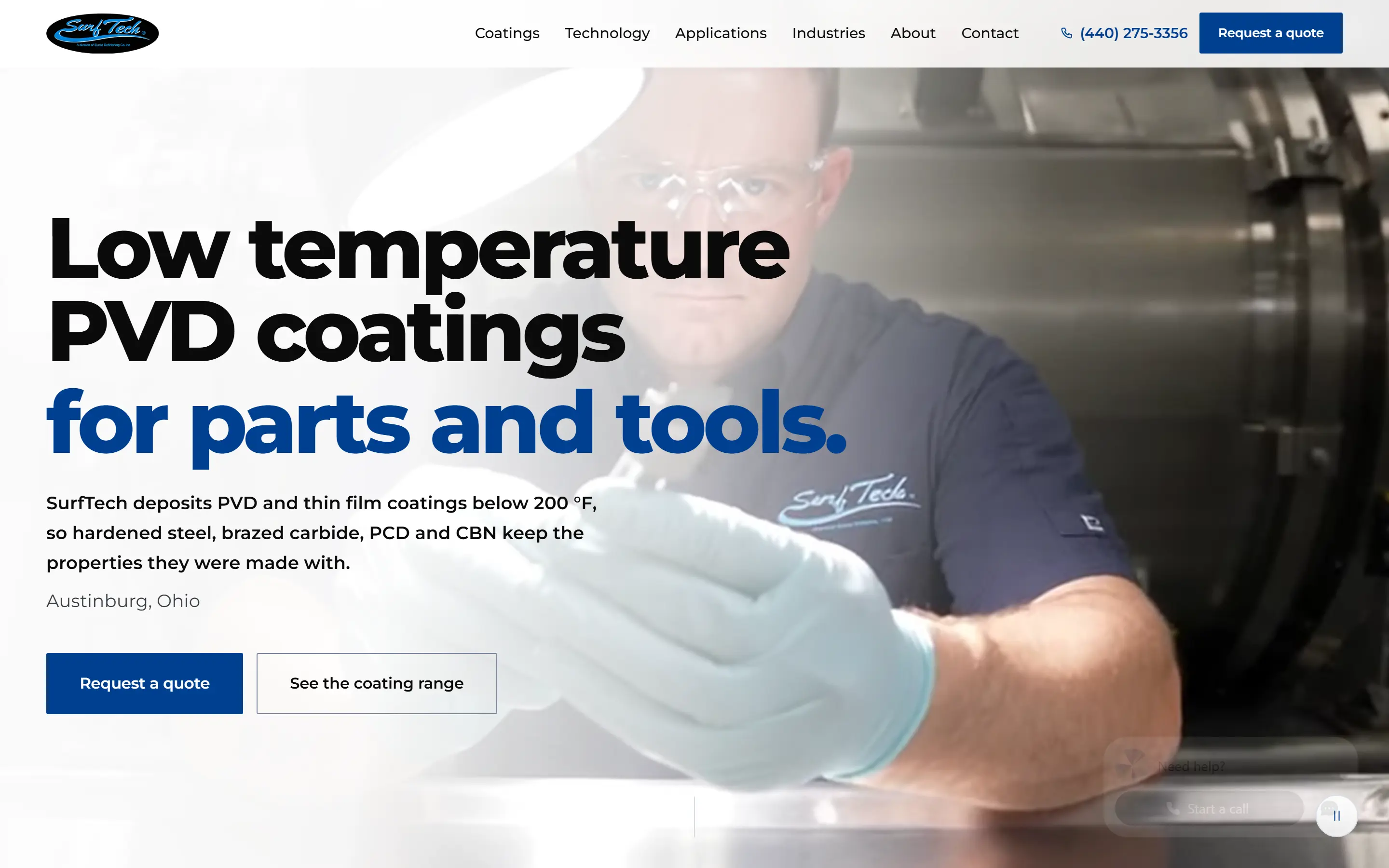
  • SurfTechThe form asks for the part, the substrate, the quantity per lot, the coating, and how the part fails now, with a drawing field that takes PDF, DXF, DWG, STEP, IGES, STL, and ZIP files.
  • Phillips Light IndustrialThe parent and sorting forms ask for the project type, location, urgency, and details, with an upload for drawings, sort criteria, and photos. The staffing form asks for the roles, the number of workers, and the shifts.

Questions owners ask about RFQ-first websites

What is an RFQ-first website?
An RFQ-first website is built around the request for quote. It states your processes, materials, tolerances, and certifications as plain text, so a buyer can check the fit, and it ends with a quote form that takes the drawing, quantity, material, and date.
What should a quote form on a manufacturing website ask for?
It should ask for the drawing, the quantity, the material, and the date the parts are needed, plus whatever your estimator needs to price your process. A finisher may add the annual volume, and a coater the substrate and how the part fails now. Keep it to the fields you need to price the work on the first pass.
Which drawing file types should a quote form accept?
It should accept the files your buyers send and your estimators can open. The quote form we built for SurfTech takes PDF, DXF, DWG, STEP, IGES, STL, and ZIP files.
What does an RFQ-first website cost?
Our RFQ-first website is $6,000, one time, with the quote form, the AI assistant, and the Excel lead sheet included, and the full source code is yours at launch. A starter website for a shop with one or two processes is $2,000, also with a quote form that takes drawings.
Can you add the AI assistant to the website we already have?
Yes. The assistant is included in every $6,000 website we build, and adding one to a website we did not build is quoted per project, since the work depends on how that site is built and how much content needs preparing. If your specifications only live in PDFs, we turn them into web pages first, so the assistant has something to answer from.

Get a fixed quote for an RFQ-first website.

Send us your website address and a few lines about what you make. We will reply with the scope, a fixed price, and a launch date. To see where your site stands today, our RFQ readiness scorecard runs twenty checks in about four minutes.